+971 50 634 3878 Sharjah, Dubai info@lifeguarddatarecovery.com

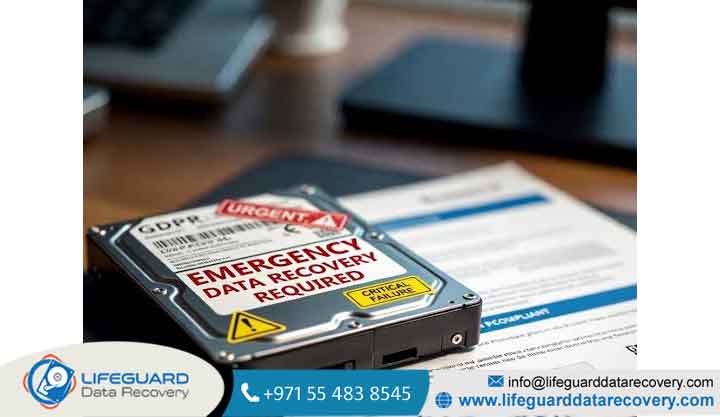
Is Emergency Data Recovery Worth It?
When a critical drive crashes, a server volume unmounts, or a flash drive suddenly stops detecting, panic sets in immediately. When deadlines loom or years of business data vanish into thin air, the immediate impulse is to opt for the fastest possible solution This brings up a critical question Lifeguard Data Recovery
is emergency data recovery worth it The short answer: It depends on your financial and operational risk. Emergency data recovery services carry a significant price premium often 50% to 200% higher than standard recovery rates. If an outage costs your company thousands of dollars per
hour, or if you are facing non-negotiable legal deadlines, expedited recovery is a smart investment. If
your lost files can be reconstructed manually in an afternoon, paying for rush service is rarely justified This guide breaks down the true differences between standard and expedited recovery, analyzes real-
world cost structures, and gives you a 3-minute decision framework to determine if emergency data recovery is worth the cost Lifeguard Data Recovery
Standard vs. Emergency Data Recovery: What Are You Paying For?
Understanding why expedited options cost more requires looking at how data recovery labs manage incoming jobs.
Standard Turnaround vs. 24/7 Emergency Services
When you submit a storage device under a standard data recovery service tier, your media joins a queue. Engineers work on it during normal business operating hours, typically completing diagnostic imaging, component replacement, and file extraction over 5 to 15 business days.
24/7 Engineer Allocation: A primary recovery engineer (and often a secondary specialist) is assigned exclusively to your device around the clock.
Immediate Cleanroom Access: Physical drive repairs bypass standard scheduling and go directly into an ISO Class 5 cleanroom bench.
Continuous Imaging Cycles: Cloning and extraction hardware run continuously overnight with real-time monitoring to address bad sectors or controller dropouts immediately.
When Speed Is Non-Negotiable
For businesses, the justification for emergency data recovery rarely comes down to sentiment—it is rooted in minimizing operational downtime. Expedited recovery becomes necessary during:
Mission-Critical Server Failures: Database crashes halting point-of-sale systems, ERP networks, or transactional web applications.
Regulatory & Compliance Deadlines: Tax audits, court submissions, or client deliverables bound by strict contractual service level agreements (SLAs).
High-Cost Idle Workforces: Scenarios where dozens or hundreds of employees cannot perform their jobs due to an inaccessible central storage environment.
The Financial Equation: How Much Does Emergency Data Recovery Cost?
Data recovery pricing varies based on hardware architecture and failure severity. However, speed remains one of the largest cost multipliers in the industry.
Key Factors That Drive Up Emergency Costs
Why do rush services command such a significant markup? Labs factor several direct operational costs into their rush pricing:
Overtime and Shift Premiums: Engineers work through nights, weekends, and holidays to keep drive imaging equipment active continuously.
Immediate Donor Hardware Sourcing: If a mechanical hard drive requires a head stack assembly or spindle motor replacement, a matching donor drive (matching model, firmware, country of origin, and microcode) must be pulled immediately from local cleanroom stock or courier-delivered overnight.
Dedicated System Resource Allocation: Advanced hardware imagers and software suites (such as PC-3000 systems) are locked exclusively to your drive, preventing the lab from using that equipment for other customer jobs.
Emergency Hard Drive Recovery (HDDs)
Traditional hard disk drives rely on spinning platters and magnetic read/write heads positioned just 3 to 10 nanometers above the media surface. When a mechanical failure occurs evidenced by clicking, grinding, or beep sounds the drive must be opened inside an ISO Class 5 cleanroom. Airborne dust
in a standard room contains millions of particles per cubic foot; a single dust particle landing on a platter spinning at 7,200 RPM will destroy the magnetic layer instantly. Emergency HDD recovery involves swapping damaged head stacks or platter assemblies in a clean environment to read the drive
before total mechanical breakdown occurs.
Emergency SSD Data Recovery
Unlike HDDs, solid-state drives have no moving parts, but emergency recovery is often more complex. Modern SSDs utilize complex wear-leveling algorithms, hardware encryption, and controller firmware that can panic or lock up. Furthermore, if an SSD receives power after a file deletion or corruption
event, the controller’s background TRIM command may permanently zero out deleted data blocks. Emergency SSD recovery requires specialized technicians who can halt TRIM operations, bypass failed controller chips, or perform chip-off NAND extractions using specialized hardware.
Emergency RAID & Server Data Recovery
Enterprise storage failures involving RAID arrays (RAID 0, 5, 6, 10), Storage Area Networks (SAN), or Network Attached Storage (NAS) carry the highest operational stakes. When multiple drives fail simultaneously in a degraded array, emergency technicians must:
Clone every individual member drive bit-by-bit (bypassing damaged sectors).
Manually reconstruct the array’s controller configuration, stripe size, drive order, and parity parameters using hex analysis.
Repair virtual machine disk images or corrupt file systems (NTFS, EXT4, ZFS) to extract database files.
Signs & Symptoms You Need Professional Emergency File Recovery
If your storage device exhibits any of the following symptoms during a critical project, power it down immediately:
Audible Clicking, Grinding, or Scraping: Indicates physical contact between the read/write heads and the magnetic platters (a head crash). Continued power cycling permanently shreds the data layer.
Device Not Detected in BIOS/Disk Management: The drive fails to enumerate at the hardware level, often pointing to firmware corruption or PCB electrical failure.
S.M.A.R.T. Predictive Failure Warnings: System alerts signaling rapid accumulation of uncorrectable bad sectors or read/write errors.
Degraded or Missing RAID Volume Flags: Controller alerts showing multiple drive drops across a striped array.
I/O Device Error or Formatting Prompts: File system structures have collapsed, rendering the partition RAW.
The “3-Step Value Test”
Calculate the True Cost of Lost Data: Add up the financial cost of lost business revenue, employee downtime hours, potential breach-of-contract penalties, and the time required to reconstruct the data manually.
Evaluate the Turnaround Delta: Compare the financial impact of a 48-hour recovery window versus a 10-day window. If waiting 10 days costs your business in lost operations, paying a emergency recovery fee is a clear, net-positive investment.
Verify the Rarity of the Files: Confirm whether the missing data exists anywhere else in your organization.
When Emergency Data Recovery Is NOT Worth It
Save your budget and avoid rush recovery under these conditions:
Alternative Backups Exist: You have a secondary cloud snapshot (OneDrive, iCloud, AWS, Google Drive) or an older local drive backup that only leaves a few hours of work missing.
Replaceable Media Files: The drive contains re-downloadable software, game libraries, or public assets that require time, but no capital, to replace.
Reconstruction Cost is Low: A freelancer or staff member can re-key or recreate the lost document in a few hours.
Critical “Do’s and Don’ts” in a Data Recovery Emergency
When panic strikes, improper handling is the leading cause of permanent data loss.
DIY Mistakes That Destroy Recoverable Data
Running Native Repair Utilities (CHKDSK / First Aid): Windows CHKDSK and macOS First Aid are designed to bring a file system back to a working state not to protect your files. On a drive with bad sectors, these tools force write operations over damaged blocks, corrupting file headers permanently.
Attempting In-Place Software Recovery on a Physical Crash: Running downloaded file recovery software on a mechanically clicking HDD or corrupted SSD strains the media, causing complete drive failure during the scan.
Opening the Hard Drive Casing: Opening a drive outside an ISO Class 5 cleanroom introduces micro-particles that ruin read/write heads within seconds of spinning up.
Freezing or Tapping the Drive: Internet myths about freezing drives or hitting them with a screwdriver to free stuck heads frequently destroy magnetic platters beyond repair.
Free Places to Look Before Paying for Service
Before approving a paid recovery job, perform a systematic audit of these locations:
Cloud Platform Version Histories: Check the “Trash” or “Version History” tabs in Google Drive, Dropbox, OneDrive, or iCloud (deleted items are often retained for 30 to 90 days).
Local Temp Folders: Search operating system temporary directories on macOS/Linux) for auto-saved document drafts.
Sent Attachment Folders: Audit outbound email accounts, messaging platforms (Slack, Teams), or file transfer logs for shared draft copies.
Prevention Tips: Avoiding Future Emergency Recovery Costs
The most cost-effective emergency data recovery is the one you never have to pay for.
Implement the 3-2-1 Backup Strategy: Maintain 3 total copies of your critical data across 2 different media types with 1 copy stored off-site or in an isolated cloud environment.
Monitor Storage Health Proactively: Install S.M.A.R.T. monitoring software (e.g., CrystalDiskInfo or DriveDx) to detect early indicators of drive degradation before complete failure occurs.
Frequently Asked Questions (FAQs)
Can emergency data recovery guarantee 100% file retrieval?
No legitimate data recovery lab will guarantee 100% data retrieval before physically diagnosing the drive. Success rates depend entirely on the physical state of the storage media, the extent of sector corruption, and whether data blocks were overwritten.
How long does 24/7 emergency data recovery take?
Most emergency recoveries are completed within 24 to 72 hours. The timeframe depends on drive capacity and mechanical health; cloning a severely degraded multi-terabyte drive block-by-block takes a fixed amount of time, regardless of how many engineers are assigned to it.
What happens if an emergency data recovery attempt fails?
Under a standard “No Data, No Fee” policy, reputable labs will not charge the main recovery service fee if they fail to retrieve your target files. However, specialized emergency rush fees or donor component costs may remain non-refundable depending on the service agreement signed prior to diagnosis.
Is emergency RAID recovery possible without shipping physical hardware?
Yes. If the underlying hardware (drives and storage controller) is healthy and the failure is purely logical (such as a corrupted partition table, lost configuration, or deleted virtual machine), technicians can perform remote emergency recovery over a secure, encrypted network connection.