+971 50 634 3878 Sharjah, Dubai info@lifeguarddatarecovery.com
Is Data Recovery Guaranteed in UAE?
The sudden loss of mission-critical business files, proprietary source code, or irreplaceable personal memories triggers immediate panic. In that moment of distress, the instinctive response is to find absolute certainty. Facing an active data crisis, you may find yourself asking: Is data recovery guaranteed in UAE?
When searching for data retrieval options in the United Arab Emirates, advertising headlines frequently boast ” success rates” or “guaranteed results.” Lifeguard Data Recovery However, the structural reality of storage engineering tells a different story. While advanced laboratory techniques can work wonders, claiming an absolute,
catch-all physical guarantee is mechanically impossible. lifeguard data recovery This guide clarifies the technical boundaries of modern storage media, analyzes how laboratory metrics actually work, and explains how to safely navigate professional recovery services in Dubai, Abu Dhabi, and the wider UAE.
1. Demystifying the “Data Recovery Guarantee” in the UAE
When a service provider references a “guarantee,” it is vital to separate marketing terminology from structural engineering limitations.
Why No Legitimate Lab Can Promise a Retrieval Rate
In physics and computer science, data recovery is an exploratory process, not a manufacturing line. If a storage medium has suffered severe physical destruction such as a hard drive platter being deeply gouged by a broken read/write head, or an SSD’s NAND flash cells being completely incinerated the
data no longer exists in a physical format. Because data cannot be retrieved from a state of total physical annihilation, an absolute, mechanical guarantee is technically dishonest.
Understanding the Financial Guarantee
When elite laboratories use the word “guarantee,” they are almost always referring to a financial structure rather than a mechanical certainty. The industry standard policy guarantees that if an engineer evaluates your media and finds the data is completely unrecoverable, or if the specific target files you requested cannot be salvaged, you owe nothing for the attempt Important Distinction: A legitimate guarantee does not mean “we will always get your data back.” It means “if we cannot get your data back, you will not pay for the engineering hours spent trying.”
2. Decoding Data Recovery Success Rates in the UAE
Understanding how laboratory metrics are calculated helps set realistic expectations for your data emergency.
Real-World Metrics vs. Marketing Hyperbole
When you see a Data Recovery Success Rate in UAE advertised at 96% to 99%, it is essential to look at the fine print. Reputable labs calculate success based on recoverable cases, omitting devices that arrive at the facility already fundamentally destroyed. For example, if a drive has already been completely zeroed out by a military-grade overwrite tool or suffered total platter destructive scoring, it is classified as unrecoverable from the outset.
Crucial Factors That Dictate Your Recovery Probability
The actual probability of salvaging your files depends heavily on variables unique to your specific failure event:
User Intervention Post-Loss: Running automated, aggressive internet-downloaded software on a physically clicking hard drive drastically lowers the success rate, often grinding down the media substrate beyond repair.
Media Degradation: Storage sectors naturally degrade over time. The longer a compromised device remains powered on, the faster its background firmware routines corrupt remaining file remnants.
Thermal and Liquid Exposure: Devices exposed to severe heat or corrosive saltwater require highly customized chemical baths and stabilizing treatments before extraction can even be attempted.
3. Can All Lost Data Be Recovered? Physical vs. Logical Damage
To understand what can realistically be salvaged, data loss must be divided into two primary categories: software-level (logical) issues and hardware-level (physical) failures.
Logical Data Loss: Deletion, Formatting, and Corrupted File Systems
Logical damage occurs when the storage device remains physically healthy, but the data configuration layer breaks down. Examples include accidental file deletion, partition formatting, or a corrupted master file table.
Is Data Recovery Always Successful? For logical issues on traditional spinning hard drives, the success rate is exceptionally high. When a file is deleted, the operating system merely marks that storage block as “free space” or available for writing. The raw data remains intact until new files are saved over it. If you cut power immediately, a Professional Data Recovery Services UAE engineer can systematically rebuild the underlying directory structure.
Physical Data Loss: Mechanical Failure, Impact, and Environmental Trauma
Physical damage means the device’s internal hardware components are broken, burnt, or physically compromised. This includes failed electronic PCB boards, seized spindle bearings, or dropped drives. In these scenarios, software utilities are useless and dangerous; the drive must be carefully disassembled inside an specialized laboratory environment to manually replace failed components with matching parts from identical donor drives.
4. Media-Specific Realities: Hard Drives, SSDs, and RAID Arrays
Different storage devices require entirely different extraction methodologies, each carrying its own structural limitations.
Hard Drive Data Recovery UAE: Mechanical Complexity and Platter Damage
Traditional hard disk drives (HDDs) are highly precise mechanical instruments containing magnetic platters spinning at thousands of RPMs while read/write heads hover mere nanometers above the surface. If your drive begins emitting an audible clicking, grinding, or scraping sound, the read heads have likely collapsed.
Can Physically Damaged Hard Drives Be Recovered? Yes, provided the magnetic platters remain unmarred. Engineers can perform a head-stack assembly swap inside a clean bench environment to stabilize the drive long enough to mirror its raw bitstream sectors onto an industrial imagery workstation.
SSD Data Recovery UAE The Invisible Barrier of the TRIM Command
Solid-State Drives (SSDs) present an entirely different technical challenge compared to HDDs due to how flash memory stores data. SSDs utilize NAND flash cells that must be cleared before new data can be written.
To maintain drive performance, modern operating systems use an automated command called TRIM. When you delete a file from a TRIM-enabled SSD, the operating system instantly sends an execution command to the drive controller instructing it to mark those specific flash pages as invalid. During background garbage collection, the SSD controller clears those blocks entirely.
Can SSD Data Recovery Be Guaranteed? If a file was deleted from an SSD with an active TRIM command and the drive remained powered on for even a few minutes, the data blocks are physically zeroed out. In this situation, the data is gone forever, and even direct chip-off extraction (desoldering the NAND chips to read them directly via hardware readers) will return nothing but empty sequences of zeros. However, if the SSD suffered an electronic component failure or controller crash, recovery remains highly probable because the TRIM routine never had the chance to run.
RAID Data Recovery UAE: Enterprise Configuration and Multi-Drive Complexities
Enterprise server systems, Network Attached Storage (NAS), and high-availability business environments rely on RAID arrays to stripe data across multiple drives simultaneously. When a multi-drive array crashes, it is rarely due to all drives failing at once. More often, a single drive fails unnoticed, and the extra strain causes a secondary drive to drop out, breaking the structural parity of the system.
Recovering data from a shattered RAID array involves manually examining every individual drive, correcting physical issues on failed disks, correcting firmware mismatch synchronization errors, and then using custom software emulation tools to reconstruct the original hardware controller configuration algorithm.
5. What to Look For in Professional Data Recovery Services UAE
If your data is high-value or structurally irreplaceable, avoiding retail storefront middlemen is critical. Look for a verified facility that possesses specialized engineering tools.
Class 100 Cleanroom Environments vs. Software-Only Outfits
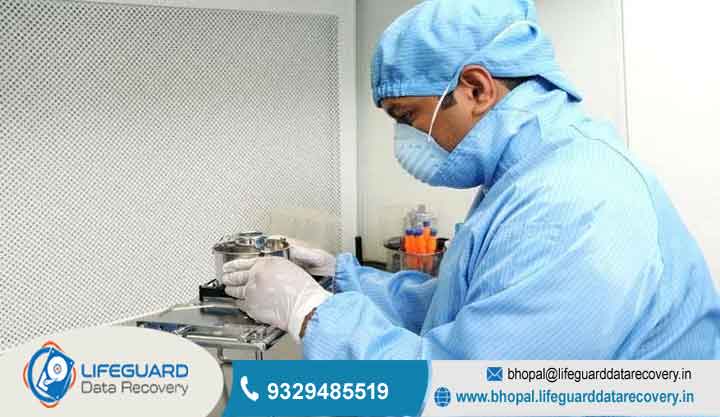
Opening a sealed mechanical hard drive outside of a specialized air-purification environment will permanently destroy it. A single microscopic dust particle or airborne fiber is hundreds of times larger than the gap between a hard drive’s head and its platter. If a particle settles on the disc, it creates an immediate head crash the next time the platters spin up. A true Data Recovery Lab UAE operates a Class 100 (ISO 5) clean bench environment that continuously filters out microscopic airborne contaminants.
The Importance of Certified Data Recovery Experts UAE
When evaluating providers, look for certifications that reflect strict data security and technical capability:
Manufacturer Approvals: Leading storage manufacturers authorize top-tier labs to open sealed device enclosures without voiding your original product warranty.
Information Security Standards: Ensure the provider follows strict data handling protocols (such as ISO 27001 compliance frameworks) to guarantee your private financial records, corporate assets, or personal files never leak online.
6. Emergency Data Recovery UAE: Immediate Steps to Save Your Files
If your storage drive exhibits signs of sudden failure, your immediate actions within the first five minutes will directly dictate your ultimate recovery success rate.
Immediate Power-Down of the Affected Machine
If you hear strange physical noises, see a sudden “Operating System Not Found” screen, or accidentally format a critical folder, hold down the power button until the machine cuts off completely. Do not shut down gracefully through the OS menu, as the operating system will write log data over your deleted file fragments during its shutdown cycle.
Avoid Dangerous DIY Internet Hacks
Do not download free, unvetted data scanning tools directly onto the compromised system drive, as installing the software will overwrite the exact data blocks you are trying to rescue. Additionally, never try unverified online workarounds, such as placing a clicking hard drive into a freezer, which introduces destructive internal condensation once the drive warms up.
Step 3: Engaging a Professional Diagnostics Evaluation
Contact an authorized laboratory specializing in Emergency Data Recovery UAE to set up a controlled, diagnostic review. Pack the device in thick, form-fitting anti-static bubble wrap inside a sturdy cardboard box to isolate it from external physical shocks during transit.
Proactive Failure Prevention: Eliminating the Need for Recovery
The absolute best way to handle a data loss emergency is to ensure you never have to undergo one in the first place.
The 3-2-1 Backup Architecture Rule
To insulate yourself or your business from catastrophic device failures, implement a structured 3-2-1 backup framework:
Maintain at least three (3) copies of your critical business and personal data.
Store these backups across two (2) different media storage types an internal NVMe drive and an external mechanical archive array).
Keep at least one (1) copy offsite, completely isolated in a secure cloud repository or remote geological location away from your primary building.
Real-Time S.M.A.R.T. Telemetry Monitoring
Most hardware components do not fail completely at random; they provide subtle warnings before dying. Use real-time monitoring software to track your drive’s internal S.M.A.R.T. (Self-Monitoring, Analysis, and Reporting Technology) health metrics. If your drive reports a spike in reallocated sectors, read-error calibration anomalies, or soaring internal temperatures, it is a clear warning sign to migrate your files to fresh media immediately.
Frequently Asked Questions (FAQ)
Which Data Recovery Company Is Best in UAE?
The best data recovery option is a company that possesses a dedicated, onsite physical laboratory with a Class 100 cleanroom, employs full-time engineering specialists, and adheres to a strict “No Data, No Fee” policy. Avoid standard computer repair shops that act as shipping middlemen to send your private data out to third-party providers.
Is Data Recovery Worth the Cost in UAE?
Determining whether the cost is justified depends entirely on a logical cost-benefit formula. If losing the data means facing regulatory compliance non-disclosure fines, weeks of corporate downtime, or the loss of priceless, un-reproducible family memories, then professional cleanroom recovery is well worth the operational expense.
Can a regular computer repair shop perform complex cleanroom extractions?
No. Standard computer retail shops do not have the specialized air filtration hoods, micro-soldering alignment stations, or custom firmware emulation tools required to handle physical component swaps safely. Attempting to open a hard drive in an unfiltered environment will permanently ruin the media.