+971 50 634 3878 Sharjah, Dubai info@lifeguarddatarecovery.com
Data Recovery Experts in Dubai
Losing access to critical files whether a company database, corporate server volume, or irreplaceable personal documents is a high-stress scenario. When digital storage media fails in the UAE, finding the Data Recovery Experts in Dubai becomes an urgent priority Lifeguard Data Recovery
This guide breaks down everything you need to know about evaluating data recovery labs, understanding hardware diagnostics, recognizing failure symptoms, avoiding dangerous DIY pitfalls, and navigating market pricing across the Emirates Lifeguard Data Recovery
Understanding Data Recovery: Logical vs. Physical Disk Failures
Not all data loss events are created equal. Storage media recovery generally falls into two core categories: logical corruption and physical hardware failure. Knowing the difference helps prevent permanent loss.
Logical Failure (File Corruption, Format, & Deletion)
Logical failures occur when the physical storage components remain fully operational, but the file system structure or partition table becomes corrupted.
Common causes include improper ejection, interrupted writes, malware, OS crashes, or accidental formatting.
Data is recovered through sector-level raw file carving, partition header reconstruction, and file system repair utilities.
Physical & Mechanical Failure (Head Crash, Motor, & PCB Failure)
Physical failure involves direct damage to internal mechanical or electronic components.
On mechanical hard disk drives (HDDs), this includes failed read/write head assemblies, seized spindle motors, and burned Printed Circuit Boards (PCBs).
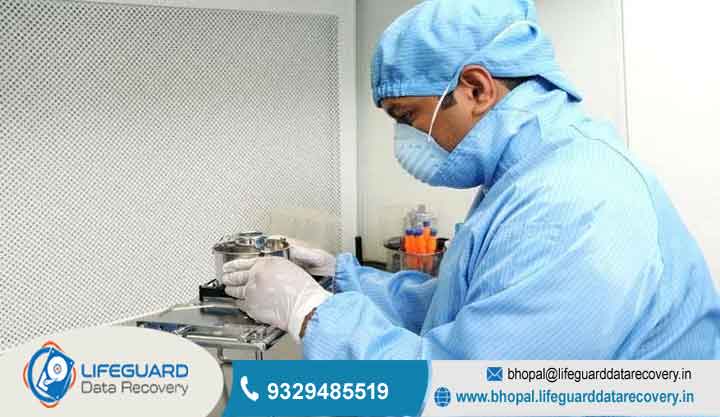
Physical recovery requires intervention by Data Recovery Experts in Dubai inside a certified cleanroom environment using specialized hardware diagnostic stations (such as PC-3000 systems).
Top Causes of Sudden Data Loss on Storage Devices
Understanding why drives fail helps mitigate risks and protect critical digital assets.
Environmental Stressors: Extreme Heat, Humidity, and Power Spikes
The Middle East operating environment poses unique challenges to storage hardware:
Thermal Stress: Ambient summer temperatures and localized HVAC outages in server rooms accelerate silicon degradation in Solid-State Drives (SSDs) and cause thermal expansion issues on HDD platters.
Electrical Instability: Sudden power spikes or brownouts degrade sensitive PCB capacitors and micro-controllers, causing immediate electronic component failure.
Wear and Tear, Firmware Corruption, and Human Error
NAND Flash Degradation: SSDs experience write-endurance limits; once block wear hits critical thresholds, drive controllers enter a read-only lock state or panic mode.
Firmware Microcode Bugs: Drive translation layers (such as the Flash Translation Layer or FTL in SSDs) can corrupt unexpectedly, making the storage controller unable to map logical block addresses to physical NAND memory.
User Accidents: Inadvertent array deletion during RAID maintenance or running system disk tools on degraded drives remains a leading cause of loss. Seeking Reliable Data Recovery Services Dubai ensures proper handling during such emergencies.
Critical Warning Signs Your Drive Is About to Fail
Catching drive failure early significantly increases the probability of 100% data extraction.
Physical Symptoms: Clicking, Grinding, or Beeping Noises
The “Click of Death”: A repetitive clicking sound from an HDD indicates the read/write heads are attempting to align, hitting mechanical stops, and resetting due to head degradation or corrupted firmware sectors.
Grinding or Scraping: Direct contact between the read/write heads and the magnetic platter surfaces; this creates physical score marks and causes unrecoverable data destruction.
Beeping Sounds: Indicates a seized spindle motor where the drive platters cannot spin up to operating RPM.
System Symptoms: I/O Errors, Frequent Crashes, and Disappearing Drives
Operating system freezes or I/O device error prompts when attempting to open files.
Unusually slow file copy transfer speeds that drop to zero bytes per second.
Drive vanishing from Windows Disk Management, macOS Disk Utility, or system BIOS.
Visiting a dedicated Data Recovery Center Dubai is recommended as soon as any of these operational anomalies manifest.
Immediate Emergency Actions: What to Do (and NOT Do) to Save Your Files
When a storage device shows signs of instability, your immediate actions determine whether your data can be saved.
Why You Must Never Run DIY Recovery Software on a Physically Failing Drive
Running off-the-shelf software tools on a degraded drive forces read operations over damaged media sectors. If a drive has weak read/write heads or platter surface degradation, the intense stress of a software scan will strip magnetic material off the platters, causing permanent data destruction. Emergency cases require immediate intervention from Emergency Data Recovery Dubai professionals operating 24/7 Data Recovery Services Dubai.
Hard Drive Data Recovery Dubai (HDD)
HDD recovery involves cleanroom component swaps, head assembly alignments, and PCB ROM chip transfers to restore drive read capabilities long enough to extract a raw bit-stream image. Specialized labs utilize dedicated hardware tools like PC-3000 to manage damaged sectors safely during Hard Drive Data Recovery Dubai.
Solid-State Drive Data Recovery (SSD)
Unlike mechanical drives, SSDs have no moving parts, but their internal complexity is high. Failures often stem from controller panic states or NAND degradation. Recovery involves micro-soldering, bypass mode initialization, or desoldering raw NAND flash chips for direct reading (Chip-Off recovery). Professional SSD Data Recovery Dubai labs utilize specialized hardware imagers designed for modern flash storage.
Enterprise RAID, NAS, & Server Recovery Solutions
Server outages and array collapses disrupt business operations. When multiple drives fail in a array, recovery engineers perform drive-level repairs first, clone each disk bit-by-bit, and manually reconstruct the array layout (stripe size, parity rotation, offset) in software without writing back to original drives.
Personal Devices: Laptops, External Drives, USBs, SD Cards, & Mobiles
Compact consumer storage devices such as flash drives, SD cards, and mobile phones—frequently employ monolithic designs (where controller, memory, and tracks are sealed under epoxy). Recovery requires micro-polishing the protective layer to expose microscopic trace pads for direct pinout soldering
Key Factors to Evaluate in a Professional Data Recovery Lab in Dubai
Choosing the right Professional Data Recovery Company Dubai ensures your media is handled safely.
ISO Class 5 Cleanroom Infrastructure
Opening a hard disk drive outside of a controlled cleanroom exposes platters to ambient dust. A single microscopic dust particle landing on a high-density platter acts like a boulder under the read/write head flying at destroying data tracks instantly. Verify that your service provider operates an certified cleanroom facility locally.
Transparency in Pricing & Policies
Reputable Data Recovery Specialists Dubai provide a clear, written evaluation before proceeding. Look for providers that adhere to a strict policy: if your target critical files cannot be retrieved, you do not pay recovery labor charges.
Security, Privacy Compliance, & NDA Standards
Data privacy is essential for both commercial entities and private citizens. Ensure the Data Recovery Lab in Dubai adheres to strict security standards, provides Non-Disclosure Agreements (NDAs), and maintains secure, offline storage workstations during extraction.
Realistic Cost Breakdown: How Much Does Data Recovery Cost in Dubai?
Data recovery pricing in the UAE varies based on physical drive damage, storage technology type, and service urgency. Beware of fixed low-cost promises (e.g., “50 AED total recovery”), as severe physical failures require specialized equipment, donor parts, and extensive engineer labor.
Long-Term Data Protection & Disaster Prevention Strategies
Recovering lost files is a reactive measure; establishing proactive backup habits prevents future emergencies.
Automated Cloud vs. Encrypted Local Backups
Combining scheduled local image backups (for fast full-system restores) with automated cloud synchronization ensures resilience against both localized physical accidents and wider disaster events.
Frequently Asked Questions (PAA-Style FAQs)
How long does data recovery usually take in Dubai?
Standard lab diagnostics take between 24 to 48 hours. Once approved, logical recoveries are typically completed within 1 to 2 business days, while mechanical cleanroom head swaps or complex SSD chip-off procedures take between 3 to 7 business days depending on donor part availability.
Can data be recovered from a physically clicking hard drive?
Yes. A clicking sound typically indicates failing read/write heads or bad firmware sectors. As long as the magnetic platters have not suffered severe rotational scraping, engineers can replace the damaged head assembly inside an ISO Class 5 cleanroom and extract your data.
What is the guarantee and how does it protect me?
A” policy guarantees that if the recovery laboratory is unable to retrieve your agreed-upon critical files, you will not be charged for the recovery effort. Always confirm that this policy is included in your written evaluation quote.
Is software data recovery safe to try at home first?
Software recovery is only safe if your drive is physically healthy and you are dealing with accidental file deletion or partition loss. You must run the software on a secondary healthy system with the target drive connected as a non-boot slave drive. Never run software on a drive making clicking or grinding noises.