+971 50 634 3878 Sharjah, Dubai [email protected]
Business Data Recovery Specialists UAE
Corporate data loss is no longer just an IT inconvenience; it is a critical business continuity crisis. For organizations operating in commercial hubs like Dubai, Abu Dhabi, and across the Emirates, sudden system failures can instantly halt financial transactions, customer service operations, and proprietary
workflows Lifeguard Data Recovery When mission-critical infrastructure fails, standard consumer fixes or off-the-shelf software are completely inadequate. Engaging certified Business Data Recovery Specialists UAE is essential to salvaging valuable digital assets safely Lifeguard Data Recovery
Understanding Enterprise Data Loss: What UAE Businesses Face
Modern organizations store vast amounts of information across distributed networks, local servers, and cloud repositories. When a disruption occurs, the ripple effects touch every department. Across sectors such as finance, logistics, healthcare, and energy in the UAE, data loss typically stems from two main categories: logical corruption (file system errors, accidental deletions, or malware) and physical degradation (motor crashes, electrical surges, or component wear).
The Cost of Downtime for Modern Organizations
When core applications go offline, organizations face immediate financial bleed through lost productivity, missed billing cycles, and breached service-level agreements (SLAs). Beyond immediate revenue loss, prolonged downtime damages institutional credibility and erodes customer trust. In an hyper-competitive regional economy, rapid recovery is a foundational requirement for organizational survival.
Logical vs. Physical Failures in Corporate Environments
Logical Failures: Occur when hardware is functionally intact, but data becomes inaccessible due to corrupted partition tables, damaged master file tables (MFT), accidental reformatting, or malicious ransomware encryption.
Physical Failures: Involve tangible hardware malfunctions, such as read/write head crashes on mechanical hard drives, flash controller failure on enterprise solid-state drives, or electrical damage from power fluctuations.
Anatomy of Corporate Storage: What Systems are Most Vulnerable?
Enterprise data architectures are remarkably complex, often combining multiple storage tiers to handle heavy transactional loads.
Business Hard Drive Data Recovery UAE
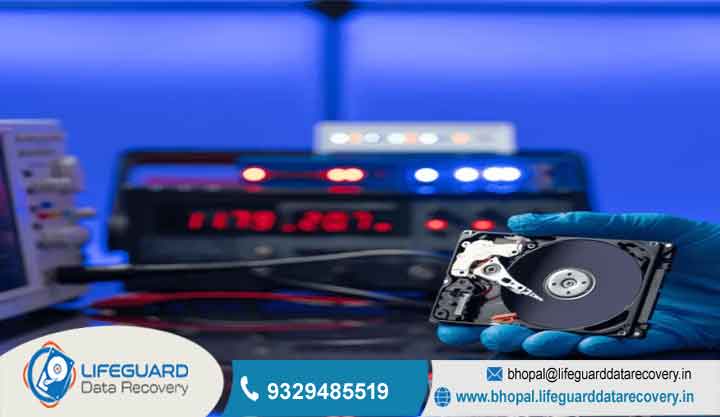
Legacy mechanical hard disk drives (HDDs) remain widely deployed in backup servers, older workstations, and archival systems. Mechanical wear over time can cause bearing seizures or head-slaps, requiring specialized cleanroom interventions to extract raw data platters safely.
Business SSD Data Recovery UAE
Solid-State Drives (SSDs) offer superior speeds but present unique recovery challenges. When an enterprise SSD controller fails or experiences sudden voltage spikes, data is locked behind proprietary firmware chips. Specialized mapping tools are required to bypass damaged controllers and read the underlying NAND flash memory chips directly.
Business Server Data Recovery UAE
Rackmount and tower servers form the backbone of corporate IT infrastructure, housing active directory environments, user profiles, and critical virtual machines. Server failures often demand immediate off-site extraction to prevent further degradation of multi-drive configurations.
Business RAID Data Recovery UAE & Business NAS Data Recovery UAE
Redundant Array of Independent Disks (RAID) and Network-Attached Storage (NAS) units distribute data across multiple drives for redundancy. However, multi-drive failures, controller card glitches, or mistaken user rebuild commands can corrupt entire stripe sets, rendering parity data useless and necessitating advanced virtual array reconstruction.
Database Data Recovery UAE
Structured enterprise databases (such as Microsoft SQL Server, Oracle, or PostgreSQL) rely on synchronized transaction logs and index structures. If a database file breaks mid-transaction, standard file recovery is insufficient; engineers must manually parse database pages, repair header structures, and reconstruct tables to ensure transactional consistency.
Why Consumer Fixes Fail: The Need for Professional Intervention
When corporate data vanishes, panic often drives IT teams to try quick fixes. However, amateur attempts on enterprise infrastructure frequently turn temporary data loss into permanent erasure.
The Risks of Over-the-Counter Recovery Software on Enterprise Drives
Running generic data recovery software directly on a failing drive forces the damaged hardware to read unstable sectors under high stress. This accelerates mechanical wear, overwrites fragmented file sectors, and locks up corrupted storage controllers permanently.
The Importance of Class 100 Cleanroom Environments
Opening a mechanical hard drive outside a controlled environment is catastrophic. Ambient dust particles measure significantly larger than the clearance gap between a hard drive’s read/write head and its magnetic platters. Microscopic debris landing on a platter instantly scratches the magnetic surface, destroying data beyond repair. Professional labs utilize ISO-certified Cleanrooms (Class 100 / ISO 5) to protect exposed media during component swaps.
The Step-by-Step Corporate Data Recovery Workflow
Executing Professional Business Data Recovery UAE requires a meticulous, engineering-driven framework to protect the integrity of sensitive files:
Initial Intake and Secure Evaluation Documenting media state, analyzing failure vectors in a controlled diagnostic lab, and drafting a transparent recovery roadmap.
Forensic Imaging and Clone Creation Building bit-stream, sector-by-sector copies of the storage media. Working exclusively with clones ensures the original corporate asset remains entirely unaltered.
Logical Reconstruction and File System Repair Rebuilding lost directory trees, mapping partition configurations, and executing targeted Business File Recovery UAE protocols.
Data Verification and Integrity Checks Rigorously testing recovered file headers, database structures, and application files to ensure complete readability before client delivery.
Security, Confidentiality, and Compliance in the UAE
Corporate data handled during an emergency recovery phase often contains proprietary trade secrets, financial records, or personally identifiable information (PII). Protecting this data is both an ethical and a legal mandate under the UAE Personal Data Protection Law (PDPL).
Non-Disclosure Agreements (NDAs) and Chain of Custody
Reputable enterprise labs enforce strict chain-of-custody tracking from device pickup to final handoff. Legally binding NDAs guarantee that extracted files remain strictly confidential and are isolated from external networks.
Alignment with UAE Data Protection Regulations
Secure Business Data Recovery UAE and Confidential Data Recovery UAE practices align closely with regional compliance frameworks. Ensuring that recovery operators utilize encrypted temporary storage and secure disposal methods protects enterprises from regulatory penalties and data leakage liabilities.
Emergency Protocols: What to Do When Disaster Strikes
When a storage subsystem fails unexpectedly, swift and disciplined action minimizes long-term damage to your Company Data Recovery UAE prospects.
Immediate Containment Steps
Power Down Immediately: Cut power to the affected server or workstation to prevent automatic write cycles or cascading controller damage.
Do Not Rebuild RAIDs: Refrain from running automated array rebuild or check-disk (chkdsk) utilities on degraded multi-drive setups, as incorrect parity syncs can overwrite missing data blocks.
Isolate the Media: Label the failed drives clearly and note the exact error codes or audible anomalies observed prior to failure.
Selecting Corporate Data Recovery Services UAE
When evaluating vendors for Emergency Business Data Recovery UAE and overall Commercial Data Recovery Services UAE, look for technical credentials, transparent pricing structures, physical cleanroom facilities within the region, and a strict “No Data, No Charge” evaluation policy.
Future-Proofing Your Infrastructure: Prevention Best Practices
Mitigating future risk requires proactive defensive engineering across your entire operational footprint.
Implementing the 3-2-1 Backup Strategy for Enterprises
Organizations must maintain at least three copies of critical files across two distinct media formats, with a minimum of one backup stored securely offsite or in a geo-redundant cloud environment.
Automated Redundancy and Health Monitoring
Deploy real-time SMART (Self-Monitoring, Analysis, and Reporting Technology) diagnostics alongside regular automated integrity audits. Consistent testing of your disaster recovery plans ensures that Business Data Recovery UAE, Enterprise Data Recovery UAE, and Corporate Data Recovery UAE measures remain a fallback safety net rather than an active daily necessity.
Frequently Asked Questions (FAQs)
How much does professional business data recovery cost in the UAE?
Pricing varies widely depending on the storage media type (e.g., single SSD vs. multi-bay enterprise RAID), the severity of physical damage, and whether cleanroom donor parts are required. Reputable labs offer free initial diagnostics before quoting a fixed cost.
Can encrypted enterprise drives or RAID arrays be successfully recovered?
Yes. Providing that the encryption credentials, passwords, or recovery keys are available, certified engineers can successfully reconstruct logical structures and decrypt data volumes post-extraction.
What is the typical turnaround time for commercial data recovery labs?
Standard evaluations usually take between 24 to 72 hours, while standard recovery workflows are completed within 3 to 5 business days. Expedited emergency queues are often available for mission-critical corporate operations.
Is it safe to ship physical server drives or NAS units to a lab within the UAE?
Yes, provided components are packed using professional anti-static bags, thick foam cushioning, and shock-absorbent outer containers via secure local courier networks operating between Dubai, Abu Dhabi, and other emirates.


