+971 50 634 3878 Sharjah, Dubai info@lifeguarddatarecovery.com
Best SSD Recovery Service UAE
Solid-state drive (SSD) failure represents one of the most technical challenges in modern data recovery. Unlike traditional hard disk drives (HDDs) that rely on mechanical platters and magnetic heads, SSDs store data electronically across microchips using complex controller algorithms. When an SSD fails in Lifeguard Data Recovery
the United Arab Emirates whether due to logical corruption, electronic power surges, or controller firmware collapse recovering lost files requires specialized Best SSD Recovery Service UAE hardware, deep firmware engineering, and cleanroom facilities Lifeguard Data Recovery
Understanding SSD Failures and SSD Data Recovery in the UAE
Solid-state drives rely on non-volatile NAND flash memory chips managed by a central controller. Understanding how these components interact is vital when evaluating SSD Data Recovery UAE solutions, as flash recovery operates under fundamentally different principles than traditional magnetic media.
How NAND Flash, Controllers, and Wear Leveling Work
The SSD controller translates logical block addresses (LBA) requested by your operating system into physical addresses on the NAND flash chips via the Flash Translation Layer (FTL). To maximize drive longevity, the controller distributes write and erase cycles evenly across memory cells a process called wear leveling. When an SSD experiences instability, corruption in the FTL mapping table makes the drive unable to locate where data is physically stored, presenting to the operating system as a dead or unformatted drive.
Key Causes of Breakdown: SSD Repair and Data Recovery UAE
Understanding the root cause of drive failure helps determine whether software intervention is possible or if hardware-level recovery is required. Specialized engineering labs in the region offer comprehensive SSD Repair and Data Recovery UAE workflows designed to address diverse mechanical and logical failure vectors.
Controller Firmware Corruption and Electronic Failures
The controller chip runs complex microcode (firmware) to manage data routing, error correction codes (ECC), and background maintenance. Power fluctuations, sudden outages, or thermal degradation can corrupt this firmware. When this occurs, the controller defaults to a protected diagnostic state (often termed “ROM Mode” or “Safe Mode”), rendering the drive completely inaccessible to standard computer systems and presenting incorrect capacities (such as 20 MB or 128 MB).
NAND Wear-Out, Bad Blocks, and Thermal Degradation in Gulf Climates
NAND flash cells have a finite write endurance measured in Terabytes Written (TBW). As cells degrade over time, background error correction must work harder to read data. In high-ambient-temperature environments common across the Gulf region, thermal throttling can accelerate component breakdown. Excessive heat breaks down the electrical charge within NAND cells, causing bit rot and widespread bad block formation that can freeze host operating systems.
Critical Signs Your SSD Is Failing and Needs Professional SSD Recovery UAE
Recognizing early indicators of SSD breakdown provides the best chance of saving critical files. If your system exhibits these symptoms, seeking immediate Professional SSD Recovery UAE assistance prevents severe data loss caused by continuous read/write cycles.
Sudden Read-Only Attribute: The drive locks itself into read-only mode to protect existing data from further corruptive write attempts.
Extreme Transfer Drop-Offs: File copying speeds plunge from hundreds of megabytes per second down to zero bytes per second before freezing the operating system.
RAW File System Conversion: The operating system prompts you to format the drive or displays disk volumes as unallocated/RAW.
System Boot Delays and POST Freezes: The host computer hangs on the motherboard BIOS/UEFI splash screen while attempting to identify the connected drive controller.
Disappearing Volumes: The drive disappears from File Explorer or Disk Management mid-operation and only reappears after a full system reboot.
Read-Only Mode and Sudden Unmounted Volume Errors
When an SSD controller detects that its wear-leveling threshold has been reached or that bad blocks have depleted reserve NAND capacity, it enforces a write-protect status. While files may still appear visible, attempting to modify or write new data causes immediate system crashes. If the controller’s FTL translation table corrupts during a read-only state, the volume will fail to mount entirely upon the next system restart.
Frequent System Crashes, BSODs, and File Read Errors
Blue Screen of Death (BSOD) errors referencing or frequently point to an SSD failing to supply required operating system files in real time. Continued attempts to reboot a computer experiencing these errors subject the drive to additional power cycles, which accelerates electronic cell failure and pushes a struggling controller into a permanent lock status.
Interface Variations: NVMe SSD Data Recovery UAE
Next-generation non-volatile memory express (NVMe) storage operates over the high-speed Peripheral Component Interconnect Express (PCIe) bus, bypassing traditional SATA bottlenecks. Advanced NVMe SSD Data Recovery UAE protocols address the unique architectural complexities of these ultra-fast drives.
Protocol-Level Extraction Challenges on High-Speed NVMe Drives
NVMe drives utilize multiple parallel lanes (PCIe x2 or x4) to achieve throughput speeds exceeding 7,000 MB/s. Recovering data from corrupted NVMe storage requires dedicated hardware imagers capable of controlling individual PCIe communication lines. Unlike SATA drives, NVMe controllers run complex multi-core background tasks that can trigger intense thermal spikes during raw block-level imaging, necessitating active cooling solutions within the laboratory environment.
Specialized Protocols for M.2 SSD Data Recovery UAE
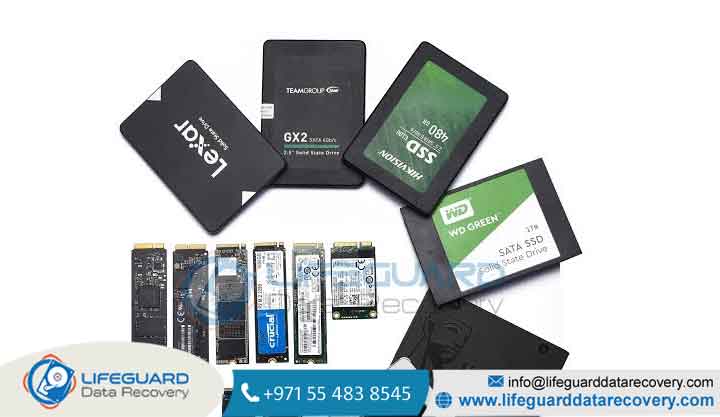
M.2 drives exist in various form factors (2280, 2242, 2230) and protocol specifications (SATA vs. PCIe NVMe). Implementing certified M.2 SSD Data Recovery UAE methods requires precision hardware designed for compact, high-density circuitry.
Recovering Soldered On-Board Storage (Apple Mac & Modern Ultrabooks)
Modern laptops, including Apple MacBooks equipped with M-series (M1/M2/M3) Apple Silicon chips and ultra-thin Windows laptops, feature NAND chips soldered directly onto the main logic board. Recovering files from these devices cannot be accomplished by simply removing the drive. Certified labs utilize micro-soldering, board-level power rail repair, and hardware bypass interface tools to restore logic board communications long enough to image the raw NAND encrypted array.
Emergency First-Aid: SSD Recovery Services UAE Triage Protocol
What you do in the first five minutes after an SSD crashes determines whether your files can be successfully retrieved. Following a disciplined SSD Recovery Services UAE emergency triage procedure isolates damaged hardware before data becomes permanently unrecoverable.
Immediate Power-Down to Prevent Overwriting and TRIM Execution
When drive errors occur, cut power to the host machine immediately. Do not execute standard shutdown routines if the system is unresponsive; hold down the power button or disconnect power entirely. Leaving the drive powered on allows the operating system to send automated TRIM instructions and background garbage collection routines, which actively zero out unallocated sectors and permanently erase recoverable data structures.
Safe Diagnostic Testing (Software Scanning vs. Hardware Risks)
Never run automated commercial software recovery tools or native OS utilities (such as or on a physically failing or unstable SSD. Software utilities force intense, repetitive read requests across damaged NAND cells, triggering controller firmware panics and accelerating silicon breakdown. Diagnostic testing must be performed using dedicated hardware imagers that can bypass OS file calls entirely.
Cleanroom Hardware Extraction and Chip-Off Recovery
If the controller chip is physically damaged or irrevocably locked, lab technicians perform hardware-level extraction. In extreme cases, technicians remove individual NAND memory chips using precision hot-air rework stations, read the raw binary hex dump of each chip using specialized gang programmers, and manually reconstruct the controller’s FTL wear-leveling algorithm in software.
How to Evaluate an SSD Data Recovery Company UAE
Choosing the right facility is critical when sensitive personal or corporate data is at stake. Evaluating an SSD Data Recovery Company UAE requires checking their hardware infrastructure, forensic security certifications, and technical capabilities.
Class 100 Cleanroom Verification and Micro-Soldering Equipment
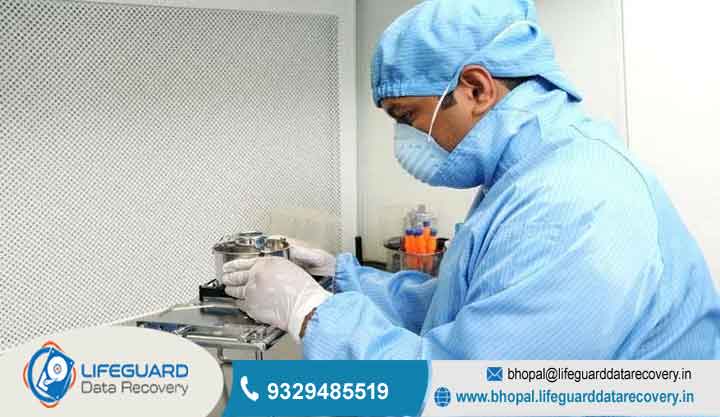
While SSDs do not contain moving mechanical platters like HDDs, hardware repair on modern flash storage requires extreme cleanliness. Replacing surface-mount technology (SMT) components, handling microscopic trace repairs, and conducting chip-off procedures demand ISO 5 Class 100 workstations, high-magnification stereomicroscopes, and thermal rework equipment to protect delicate silicon components from airborne debris and static discharge.
Data Confidentiality Protocols and Local Compliance Standards
Enterprise entities, medical institutions, and legal firms must ensure that their service provider complies with strict data protection guidelines. Verify that the lab provides signed Non-Disclosure Agreements (NDAs), maintains air-gapped forensic extraction networks isolated from the internet, and utilizes encrypted storage arrays for extracted target files.
Transparent Pricing Models: Diagnostic Fees and Policies
Reputable facilities operate under a transparent diagnostic evaluation framework. Beware of providers offering fixed flat rates prior to inspecting the device, as SSD recovery complexity varies wildly between simple logical corruption and total controller firmware breakdown. Industry-standard labs offer explicit evaluation breakdowns and operate under a strict “No Data, No Fee” commitment for physical hardware failures.
What Sets Leading SSD Recovery Experts UAE Apart
Top-tier SSD Recovery Experts UAE possess specialized knowledge in reverse-engineering proprietary storage protocols. Flash controllers utilize complex algorithms including internal encryption, block XOR pattern scrambling, multi-page layout interleave, and dynamic ECC correction. True lab experts do not rely on off-the-shelf software; they maintain an extensive library of donor controller boards, possess specialized pinout databases for micro-probe connections, and write custom algorithmic translators to reconstruct damaged file systems manually.
Emergency Coverage: SSD Recovery Service UAE Across the Emirates
For critical data loss situations, choosing a service with rapid diagnostic turnaround times and established logistics across all seven Emirates is crucial. Modern SSD Recovery Service UAE infrastructure supports residential, commercial, and enterprise clients nationwide.
SSD Data Recovery Dubai & SSD Recovery Service Dubai Solutions
Serving key commercial centers like Dubai International Financial Centre (DIFC), Business Bay, JLT, and Dubai Internet City, specialized SSD Data Recovery Dubai facilities provide rapid emergency triage. Clients can access dedicated SSD Recovery Service Dubai drop-off locations or utilize secure, climate-controlled courier pickup services for fast lab evaluations.
SSD Data Recovery Abu Dhabi for Corporate & Government Clients
Tailored specifically for government entities, defense contractors, and enterprise headquarters in the UAE capital, SSD Data Recovery Abu Dhabi operations prioritize strict data chain-of-custody protocols, offering air-gapped forensic recovery and on-site NDA fulfillment.
SSD Recovery Service Sharjah for Personal & Commercial Media
Providing accessible technical evaluation for educational institutions, creative media houses, and personal media users, SSD Recovery Service Sharjah offers detailed diagnostics for damaged external portable SSDs, camera media, and personal computers.
SSD Data Recovery Ajman and Northern Emirates Coverage
Extending specialized recovery assistance to clients in Ajman, Ras Al Khaimah, Fujairah, and Umm Al Quwain, regional SSD Data Recovery Ajman logistics networks ensure safe transport of delicate flash media to central laboratory facilities equipped for complex micro-soldering and firmware repairs.
Proactive Tips to Prevent Solid-State Drive Data Loss
While professional recovery options are available across the UAE, implementing preventative data maintenance habits remains the best line of defense against unexpected hardware breakdown.
Implementing the 3-2-1 Backup Strategy
To guarantee complete protection against hardware failures, logical corruption, and physical disasters, adopt the industry-standard 3-2-1 backup framework:
3 Copies of Data: Keep your primary working file set and at least two distinct backup copies.
2 Different Storage Media Types: Store backups on different technologies (e.g., one internal high-speed SSD and one local network-attached storage array or external HDD).
1 Off-Site Copy: Keep at least one backup copy in an off-site location, such as secure cloud storage, to protect against local hardware theft or facility damage.
Thermal Management and S.M.A.R.T. Health Monitoring
Excessive heat significantly accelerates NAND degradation and controller failure. Ensure desktop PC builds and high-performance laptops feature proper thermal pads, heatsinks, and adequate case airflow. Additionally, install Self-Monitoring, Analysis, and Reporting Technology (S.M.A.R.T.) monitoring utilities to track attributes such as Percentage Used, Media and Data Integrity Errors, and Temperature Threshold Warnings in real time.
Frequently Asked Questions (FAQs)
Can data be recovered from an SSD after the TRIM command has been executed?
While the TRIM command instructs the SSD controller to erase unallocated memory blocks during background garbage collection, recovery is sometimes still possible. If the drive is powered down immediately after deletion or formatting, garbage collection may not have completed across all physical NAND chips. Specialist labs using hardware tools like PC-3000 can bypass the logical translation layer and retrieve raw data directly from physical memory blocks before they are fully zeroed out.
How much does professional SSD recovery typically cost in the UAE?
The cost of SSD recovery depends entirely on the failure type rather than drive capacity. Logical recoveries involving simple file system corruption are less complex, whereas physical hardware damage, corrupted controller firmware, or micro-soldering requirements demand specialized lab hours and equipment. Reputable facilities provide a free or nominal diagnostic assessment to analyze the drive and issue an exact cost quote before proceeding.
Is software recovery safe to run on a physically failing or unreadable SSD?
No. Running commercial software recovery programs on a physically failing or unstable SSD is dangerous. Software tools continuously send intensive read requests to every sector, which overheats damaged NAND chips, accelerates block breakdown, and can cause the controller chip to panic and permanently lock down. If your drive exhibits physical hardware symptoms or drops off the system, hardware-level lab isolation is required.
How long does a typical lab SSD data recovery take in Dubai or Abu Dhabi?
Standard laboratory diagnostics and data extraction typically take between 2 to 5 business days, depending on the severity of firmware corruption or hardware damage. Emergency 24/7 priority services are often available for mission-critical business situations, allowing technicians to work continuously on the drive to complete recovery within 24 to 48 hours.
Can data be recovered from an Apple Mac with soldered storage (M1/M2/M3)?
Yes, file retrieval is possible from modern Apple Silicon MacBooks with soldered onboard NAND storage. Because these devices lack removable modular drives, certified technicians must perform board-level repairs, resolve power rail failures, or temporarily restore logic board system functionality using micro-soldering techniques to extract raw data dumps securely.