+971 50 634 3878 Sharjah, Dubai info@lifeguarddatarecovery.com
Best NAS Recovery Specialists UAE
Network Attached Storage (NAS) appliances serve as the central repository for enterprise databases, virtual machine disks, and critical unstructured data across the United Arab Emirates. However, when multiple hard drives Best NAS Recovery Specialists UAE degrade, RAID parity fails, Lifeguard Data Recovery or file systems corrupt, retrieving your data requires specialized forensic engineering rather than basic software utilities Lifeguard Data Recovery
Introduction: The Critical Role of Network Attached Storage in Modern UAE Businesses
From financial institutions in Dubai International Financial Centre (DIFC) to industrial operations in Abu Dhabi, enterprise storage infrastructure relies heavily on multi-bay NAS enclosures. These units combine individual hard drives or Solid State Drives (SSDs) into unified logical volumes to deliver high availability and throughput.
When a storage array collapses, business operations come to an immediate standstill. Navigating this scenario requires a clear understanding of hardware architectures, volume allocation mechanics, and emergency mitigation protocols to ensure successful NAS recovery in the UAE.
Why NAS Failure Mandates Immediate Action
A crashed NAS volume is in an extremely volatile state. Sustained power cycles, automated operating system background routines, or premature drive replacements can trigger irreversible data loss.
When a RAID array loses its fault tolerance, remaining member drives operate under severe thermal and mechanical stress during degraded read cycles. Without immediate intervention, a secondary drive failure can turn a recoverable logical loss into a catastrophic physical hardware breakdown.
Understanding NAS Architectures and NAS Recovery in the UAE
To recover data from a compromised NAS, engineers must reconstruct both the underlying physical drive array and the software layers created by the NAS operating system.
Multi-Disk Configurations (RAID 0, 1, 5, 6, 10, & JBOD)
Standard RAID setups distribute data across multiple drives using specific striping algorithms:
RAID 0 (Striped): Offers maximum performance with zero fault tolerance. If one drive fails, the entire volume collapses.
RAID 1 (Mirrored): Duplicates data across paired drives. Recovery involves reading intact mirror sectors if controller metadata remains uncorrupted.
RAID 5 (Block-Level Striping with Distributed Parity): Tolerates a single drive failure using XOR parity checks. Rebuilding requires reading 100% of the remaining drives’ sectors.
RAID 6 (Dual Distributed Parity): Tolerates up to two concurrent drive failures using Reed-Solomon or double XOR algorithms.
RAID 10 (Striped Mirror Sets): Combines RAID 1 mirroring with RAID 0 striping, providing high performance alongside multi-drive fault tolerance across separate mirror pairs.
JBOD (Just a Bunch of Disks): Spans partitions across drives sequentially without striping or redundancy.
Proprietary Volume Systems (Synology SHR, QNAP Storage Pools, ZFS, Btrfs)
Modern NAS vendors layer proprietary management tools over standard Linux array structures:
Synology Hybrid RAID (SHR): Combines Linux
mdadm RAID geometry with LVM (Logical Volume Manager) to slice mismatched drives into optimal size bands. If the LVM allocation map degrades, standard recovery tools read the volume as unformatted raw space.QNAP Storage Pools: Employs thin and thick volume allocation over flexible storage pools, requiring specialized extraction of LVM structures before reaching the underlying file system.
ZFS (FreeNAS/TrueNAS): Uses copy-on-write transactional pooling (zpools). Corruption in ZFS Uberblocks or intent logs (ZIL) requires manual tree-structure parsing.
Btrfs: Employs metadata trees with copy-on-write protection. Corrupted root trees require manual extraction of subvolumes and inode trees.
Mechanical and Physical Hardware Drives Failures
Hard disk drives in multi-bay NAS units run continuously under high duty cycles. Common physical failure modes include read/write head assembly breakdowns, spindle motor seizures, and thermal-induced platter degradation.
In Middle Eastern environments, high ambient heat degrades the lubricants inside a drive’s Fluid Dynamic Bearings (FDB). This accelerated evaporation increases mechanical friction and leads to head-alignment drift or spindle lockup.
Logical Volume & Filesystem Corruption
Logical corruption occurs when the underlying data structures become unreadable while the physical drives remain operational. Common causes include:
RAID Controller & Firmware Failures
A hardware controller or enclosure backplane failure can render an entire storage pool unreadable. If controller NVRAM configuration maps are lost, the system can lose track of drive order, stripe block size (e.g., 64KB, 128KB), and parity rotation protocols (e.g., Left Asynchronous vs. Right Synchronous).
Human Error and Cyber Threats (Ransomware & Accidental Deletion)
Administrative errors such as initializing the wrong volume, swapping drive slot positions during a rebuild, or expanding storage pool boundaries incorrectly—frequently crash arrays. Additionally, targeted network attacks using ransomware can lock iSCSI LUNs or delete volume snapshots, making expert NAS data recovery in the UAE necessary.
Hardware Diagnostics & Auditory Indicators
Audible Head Clicking or Grinding: Indicates the drive head actuator is failing to calibrate on the platter surface tracks.
Status LED Color Shifts: Steady or flashing amber/red drive slot indicators signal degraded array performance or disk offline status.
Excessive Heat Generation: A sudden jump in drive temperatures suggests fan module failure or severe bearing friction inside drive spindles.
System Performance & Software Alerts
SMART Parameter Spikes: Rapid increases in Reallocated Sectors Count, Current Pending Sector Count, or Uncorrectable Sector Count.
Mounting Delays & I/O Timeouts: System logs warning of read/write latency spikes across network shares or dropped iSCSI initiator connections.
Degraded Pool Notifications: Automated OS prompts warning that parity is running without fault tolerance.
Emergency Response Protocol: Immediate Steps Before Engaging Professional NAS Recovery in the UAE
When a NAS array fails, the actions taken within the first 30 minutes directly dictate the overall success rate of raw data extraction.
Safe System Isolation & Shutdown Procedure
Stop All Read/Write Operations: Disconnect network interfaces (SFP+/RJ45) immediately to prevent client access or automated background updates.
Perform a Graceful Power Down: Initiate a system shutdown through the management interface. If the interface hangs, execute a hard power-down by removing the main power source to prevent further head sweeps over degraded platters.
Document Drive Ordering: Before removing drives, label each drive bay index clearly (e.g., Disk 1, Disk 2… Disk N). Maintaining exact slot sequence is essential for reconstructing virtual striping geometry.
Preserve Original Drive Media: Do not insert new replacement drives and force a rebuild if multiple drives are displaying SMART warnings.
Sector-by-Sector Hardware Cloning & Imaging
Engineers never perform diagnostic or repair work directly on a client’s original drives. Each drive is connected to enterprise data recovery hardware such as ACE Lab PC-3000 systems to create bit-stream physical clones.
Hardware imagers bypass bad sectors, adjust head read timeouts, and control drive power supplies dynamically to extract maximum data without overstressing damaged drive mechanics.
Virtual RAID Reconstruction & Hexadecimal File System Rebuilding
Once sector-by-sector clones are secured, engineers work exclusively with the digital images:
Parameter Identification: Hexadecimal structure analysis identifies block order, stripe size, drive offset, and parity distribution algorithms across member images.
Virtual Array Assembly: Specialized software arrays simulate controller hardware to mount striped volumes virtually.
File System Extraction: Logical engines parse filesystem structures (such as ext4 inode tables, Btrfs metadata trees, or ZFS pools) to extract raw files and directory structures.
Cleanroom Interventions for Mechanical Recovery
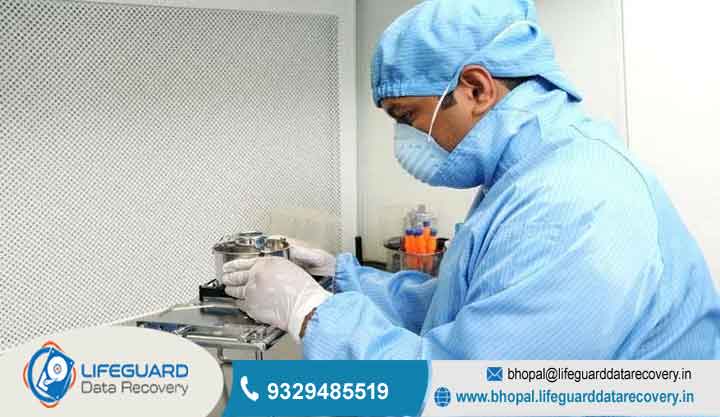
If member drives exhibit physical hardware failures such as damaged actuator assemblies or seized spindle motors the drives must be opened inside an ISO-certified cleanroom. Engineers perform head stack swaps or platter transplants using donor parts to restore drive stability long enough to complete physical sector imaging.
How to Evaluate and Select the Best NAS Recovery Specialists in the UAE
Choosing an unqualified service provider can lead to permanent data loss. When evaluating NAS data recovery specialists in the UAE, insist on verified technical capabilities and facility certifications.
Class 100 ISO 14644 Cleanroom Facilities
Hard drive components operate with head-to-platter clearances measured in nanometers. Opening a drive drive outside a controlled cleanroom exposes platters to ambient dust particles that permanently destroy magnetic media tracks.
Verify that your provider operates an ISO 14644-1 Class 5 (Class 100) environment. This standard ensures particle concentrations remain below 3,520 particles per cubic meter for particles $\mu\text{m}$, protecting opened drives during component replacement.
Advanced Toolchains & Enterprise Hardware Support
A qualified professional NAS recovery UAE facility must maintain specialized hardware and software assets, including:
ACE Lab PC-3000 Systems: (Express, SAS, Portable III) for low-level drive firmware modification, translator repairs, and sector extraction.
High-Speed Imaging Hardware: Capable of reading SATA-III, SAS-3, and NVMe protocols at native bus speeds.
Comprehensive Donor Inventory: Thousands of compatible matching hard drive control boards (PCBs), head assemblies, and micro-actuators for cleanroom part swaps.
Data Security, NDA Agreements, and ISO 27001 Alignment
Enterprise storage contains sensitive client data, trade secrets, and financial records. Ensure your chosen recovery provider delivers:
Service Expectations from a Top NAS Recovery Company in the UAE
A reputable NAS recovery company UAE operates with complete transparency regarding success rates, diagnostic timelines, and billing structures.
Guarantees and Upfront Diagnostic Quotes
Insist on clear, binding contractual guarantees:
Transparent Evaluations: Detailed diagnostic reports that explicitly list drive health, logical integrity, and expected recovery percentages before you authorize work.
Policy: If the engineering team fails to retrieve your agreed-upon critical files, you owe no service fees.
Local In-House Lab vs. Outsourced/Offshore Processing
Many local service brokers lack physical cleanrooms and engineering equipment, opting instead to ship client drives offshore to overseas facilities. This practice introduces significant risks:
Always confirm that your selected NAS recovery experts UAE perform all cleanroom work and array reconstruction locally inside their UAE-based facility.
Pricing Structures and Turnaround Times for a NAS Data Recovery Service in the UAE
Understanding cost parameters helps organizations budget effectively while preventing unexpected expenses during emergency recoveries.
Number of Drives: Overall cost scales with the number of member drives in the array, as each drive requires individual sector-by-sector cloning.
Failure Classification: Logical array reconstruction costs significantly less than physical multi-drive cleanroom head swaps.
Volume System Complexity: Custom vendor storage pools (Synology SHR, QNAP Thick Pools, ZFS zpools) require more engineering hours than basic RAID 1/0 configurations.
Standard vs. Emergency Turnaround Workflows
Standard Service (3–7 Business Days): Ideal for non-critical archives. Allows systematic imaging and virtual array analysis during normal business hours.
Emergency Service (24/7 Priority Handling): Designed for mission-critical enterprise systems. Engineering teams work around the clock in continuous shifts to image media and reconstruct volumes within 24 to 48 hours.
Synology, QNAP, ASUSTOR, and Western Digital NAS Systems
Synology DSM: Reconstructing broken SHR
mdadm/LVM configurations and fixing Btrfs metadata tree corruption.QNAP QTS/QES: Parsing flexible storage pool metadata, restoring lost LVM mapping, and recovering from Flash DOM boot failures.
Western Digital My Cloud: Resolving internal OS partition corruption and single/multi-drive drive failures in My Cloud EX/PR series.
Custom SAN and Enterprise iSCSI Storage Target Rebuilding
When NAS arrays host block-level iSCSI targets for virtual environments (VMware vSphere ESXi, Microsoft Hyper-V), recovery requires extracting virtual disk images (
.vmdk or .vhdx). Engineers repair file system structures inside the host array to restore nested file system trees within the virtual disks safelyPreventive Strategies to Eliminate NAS Data Loss in the Middle East
Implementing robust infrastructure standards drastically lowers the probability of catastrophic storage failure
Maintain a strict data backup architecture: Keep 3 total copies of critical data across 2 distinct storage media types, with 1 copy stored offsite. Enhance this framework by enabling immutable snapshot policies (Write Once, Read Many / WORM) to shield backup sets from ransomware encryption.
Proactive Climate, Power, and S.M.A.R.T. Monitoring
Environmental Temperature Control: Maintain server room ambient temperatures strictly between 18°C and 22°C to prevent HDD fluid dynamic bearing breakdown.
UPS Integration: Connect NAS appliances to smart Uninterruptible Power Supply (UPS) systems via USB/Network management cards to ensure automated, safe system shutdowns during power failures
Automated SMART Diagnostics: Configure system alerts to flag drive read/write error trends immediately, enabling disk replacements before parity fault tolerance limits are breached.
Frequently Asked Questions (FAQs) About NAS Recovery
Can data be recovered if multiple drives fail in a RAID 5 array?
Yes. Although a RAID 5 array loses its fault tolerance after a single drive fails, data recovery is still possible if additional drives fail. Engineers clone every available drive using specialized hardware instruments to read degraded sectors. By manually calculating missing parity blocks from raw physical clones, engineers can successfully reconstruct the entire array volume.
Should I run a RAID rebuild if a new drive is inserted into a degraded NAS?
No, not if the remaining drives are showing SMART warnings or making abnormal mechanical noises. A RAID rebuild subjects all remaining drives to continuous, high-stress read operations for many hours. If another drive fails during this process, the rebuild will collapse, making professional virtual reconstruction necessary.
How much does professional NAS recovery cost in the UAE?
Costs vary based on the number of drives, array capacity, file system complexity, and whether physical cleanroom repairs are required. Professional laboratories provide exact diagnostic estimates after evaluating member drives in a controlled facility.
How long does a typical NAS recovery take?
Standard evaluations take 24 to 48 hours. Depending on media size and physical drive condition, logical array extraction typically completes within 3 to 5 business days, while 24/7 emergency services can compress this timeline to 24–48 hours.
Is it safe to send my enterprise NAS drives to a local UAE lab?
Yes, provided you partner with an established provider operating an in-house ISO 14644-1 Class 5 cleanroom and certified security protocols. Verify that the laboratory processes data locally, operates air-gapped systems, and provides comprehensive non-disclosure agreements (NDAs).