+971 50 634 3878 Sharjah, Dubai info@lifeguarddatarecovery.com
Best Data Recovery Company in Sharjah
Data loss hits without warning. One moment your laptop is operating normally, and the next, a blue screen, a clicking hard drive, or an unreadable SSD wipes out years of family photos or critical business ledgers. During a digital crisis in the United Arab Emirates, panic often drives fast, poorly informed
decisions like downloading unverified utility software or continuing to power on a failing device. Both choices frequently convert temporary file corruption into permanent data destruction Navigating hardware failure requires an understanding of triage Lifeguard Data Recovery technical realities, and service evaluation. This
comprehensive guide outlines immediate action steps for data loss emergencies, breaks down storage failures, details critical security and cleanroom criteria, and helps you select the best data recovery company in Sharjah to safely retrieve your files Lifeguard Data Recovery
Immediate Triage What to Do in the First 5 Minutes of Data Loss
When storage media begins to fail, your actions within the first five minutes dictate whether your files can be saved. Missteps during this critical window cause physical disk platters to scratch or execute automated overwrite commands on flash memory
1. Power Down the Device Immediately
If you hear abnormal clicking, grinding, or high-pitched squealing, cut power to the computer or external drive right away. Continued rotation of mechanical platters with a damaged read/write head will carve grooves into the magnetic surface, destroying your data permanently.
2. Do Not Install Recovery Software onto the Affected Drive
Downloading or installing data recovery utilities onto the drive containing lost data overwrites the exact disk sectors holding your deleted files. If software must be used, run it from an external secondary drive on a completely separate system.
3. Disable Automatic Disk Utility Repairs
Operating systems often prompt you to run native repair tools like (Windows) or First Aid (macOS) when a volume becomes unreadable. Cancel these prompts. These utilities force-write changes to damaged file systems and corrupt fragile directory index structures during physical hardware failures.
4. Resist Formatting or Reinitializing
When Windows or macOS displays a prompt stating “You need to format the disk before you can use it,” select Cancel. Formatting overwrites file allocation tables and complicates deep raw-sector extraction
Hard Drive (HDD) Failures
Traditional hard drives rely on spinning platters coated in magnetic film, floating nanometers away from delicate read/write heads.
Symptoms: Clicking sounds (the “Click of Death”), high-pitched whining, unrecognized drives in Device Manager, or severe system freezing when connected.
Mechanism: Mechanical drops cause read/write heads to crash onto platters, stripping away magnetic storage layers. Overheating can burn out the Printed Circuit Board (PCB), requiring donor board transfers and firmware micro-code alignment. Mechanical hard drive data recovery in Sharjah requires physical component swaps under controlled conditions.
Solid-State Drive (SSD) Failures
Unlike HDDs, SSDs store data electronically on flash memory chips controlled by a dedicated microprocessor.
Symptoms: Sudden system crash, drive entering read-only mode, system reporting 0 MB capacity, or total failure to register in BIOS.
Mechanism: SSDs drop offline due to NAND degradation, controller firmware panics, or power surge damage. A unique challenge with modern flash storage is the TRIM command.
When enabled, the operating system instructs the SSD controller to erase data blocks immediately after deletion to optimize write speeds. Specialized SSD data recovery in Sharjah involves bypassing controller restrictions, repairing corrupted firmware, or desoldering raw NAND chips for hardware reading.
RAID Array and Server Collapses
Enterprise environments rely on redundancy (RAID 1, 5, 6, 10), but arrays remain vulnerable to combined hardware failure and human error.
Symptoms: Array volume offline, degraded performance, failed rebuild attempts, corrupted virtual machines (VMDK/VHDX).
Mechanism: When a single drive in a RAID 5 array fails, remaining drives experience extreme read stress during reconstruction. If a secondary drive develops bad sectors during this process, the controller drops the entire array offline.
Incorrect array re-initialization or forcing online drives out of order strips parity structures. Server data recovery in Sharjah for enterprise systems requires custom virtual array reconstruction to rebuild data blocks safely.
Removable Media and External Storage
External hard drives, USB flash drives, and SD cards face constant mechanical abuse and voltage drops.
Symptoms: “Insert disk” prompts, physical bending of USB connectors, snapped SD card casings, or unrecognized file systems (RAW format).
Mechanism: Broken USB connectors sever data lines to the main board, while external hard drives suffer head damage from accidental desk knocks. Specialized external hard drive recovery in Sharjah repairs damaged trace lines and bypasses encrypted controller chips to extract intact data
When DIY Software Destroys Data
Physical Mechanical Failure: Running scanning software forces damaged read/write heads to sweep across magnetic platters millions of times, scratching away disk surfaces.
Solid-State Drives with TRIM Enabled: Operating systems send TRIM instructions during scans, executing background erasures on targeted file blocks.
Drives with Bad Sectors: Consumer recovery utilities hang on unreadable sectors, causing power cycles and driver crashes that overload aging read heads.
Professional data recovery specialists in Sharjah perform all diagnostics on read-only byte-for-byte disk clones using hardware imaging tools (such as DeepSpar or protecting original customer media from operational stress.
Key Criteria for Evaluating a Data Recovery Center in Sharjah
Not all local repair outlets operate at the same technical standard. Many retail shops in the UAE act as simple intake desks, shipping client drives to third-party labs without proper handling standards. Evaluate providers using these core criteria:
1. Certified ISO Class 100 Cleanroom Access
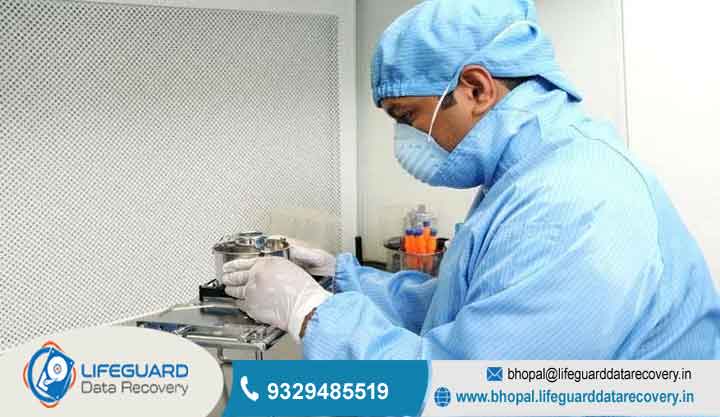
Opening a hard drive in a standard room exposes magnetic platters to thousands of airborne dust particles per cubic foot. When read heads operate nanometers above platters, a single microscopic dust particle creates a head crash. A qualified data recovery center in Sharjah must utilize certified ISO 5 (Class 100) cleanroom environments where air filtration keeps dust counts under 100 particles per cubic foot for all internal platter repairs.
2. HW-Level Equipment and Hardware-Based Extraction
Top-tier facilities rely on specialized hardware systems (like DeepSpar Disk Imagers and ACE Laboratory PC-3000 software/hardware suites) to handle unstable magnetic sectors, repair corrupt firmware modules, and bypass bad drives safely.
3. Clear Data Confidentiality Standards
Enterprise ledgers, legal records, and personal photo libraries require strict security handling. Verify that your provider signs non-disclosure agreements (NDAs), maintains offline storage arrays, and uses secure, encrypted transfer media to deliver your recovered files.
4. Transparent Diagnostics and Clear Pricing Policies
Reputable providers offer clear diagnostic reports detailing physical failure types, target file recoverable percentages, and fixed quotes. They operate under a strict policy, ensuring you pay only if your specified critical files are successfully restored.
Step-by-Step: What to Expect During the Data Recovery Process
Professional data recovery follows a structured, multi-stage path designed to secure media integrity.
Diagnostic Evaluation
The provider conducts physical, electrical, and firmware inspections inside a controlled environment. Technicians identify hardware damage, missing donor parts, and sector integrity without writing new data to your drive.
Quotation and File Preview
You receive an evaluation report listing the exact cause of failure, recovery probability, and a fixed cost estimate. A reputable service provides a verifiable file directory tree so you can verify that critical documents are readable before approving work.
Lab Repair and Sector Imaging
If hardware failure is detected, technicians swap components (donor head assemblies, PCB boards) in an ISO Class 100 cleanroom. Using hardware imagers, the team generates a low-level, byte-for-byte image clone of the target media, performing all subsequent extraction attempts on the duplicate file copy.
Logical Extraction and Verification
Engineers repair file system corruptions, reconstruct RAID volumes, or carve raw file signatures from the clone image. File integrity scans verify that key databases, archives, and images open correctly.
Encrypted Delivery
Extracted files are copied onto a brand-new, password-encrypted external drive and delivered securely via courier or local pickup.
Pricing Realities and Common Red Flags in the UAE Market
Understanding industry pricing norms helps you evaluate provider options and avoid unreliable local operations
Transparent Pricing Factors
Data recovery costs depend on execution complexity, component needs, and lab time rather than total gigabyte storage volume:
Simple Logical Recovery (Soft Format/Deletion): Lower cost profile; involves file system structure rebuilds without cleanroom intervention.
Physical Hardware Recovery (HDD Mechanical Swap): Medium to high cost profile; requires donor drive micro-matching, cleanroom bench time, and specialized equipment.
Complex SSD Controller / RAID Array Recovery: Custom pricing matrix; involves raw NAND chip desoldering, micro-trace repairs, or multi-drive parity reconstruction.
Market Red Flags
Flat Rate 100 AED” Claims: Complex cleanroom micro-surgery requires donor parts and specialized engineering time. Unusually low flat rates are often a bait-and-switch tactic used by repair kiosks before farming drives out to external labs.
Upfront Payment Demands Without Diagnostics: Professional providers invoice after diagnostic analysis confirms recovery viability.
Refusal to Provide Diagnostic Reports: Avoid services that will not document cleanroom needs, component replacements, or file preview lists.
Automated Cloud Offsite Options
Configure automated cloud sync platforms to handle daily changes to working directories, ensuring continuous protection without manual intervention.
Monitor Drive Health via S.M.A.R.T. Metrics
Install monitoring software to track Self-Monitoring, Analysis, and Reporting Technology (S.M.A.R.T.) attributes on your hard drives and SSDs. Watch for early warning signs such as reallocated sector counts, bad block occurrences, or elevated working temperatures.
Use Uninterruptible Power Supplies (UPS)
Frequent power drops or voltage spikes degrade storage hardware. Use dedicated UPS units with built-in surge protection for all server stacks, RAID arrays, and critical workstation setups.
Frequently Asked Questions (FAQs)
Can data be recovered from a hard drive making a clicking sound?
Yes. Clicking sounds usually indicate damaged read/write heads attempting to align on magnetic platters. Data can often be extracted by replacing the failed head assembly with a compatible donor drive inside an ISO Class 100 cleanroom and imaging the drive via hardware tools.
How much does professional data recovery cost in Sharjah?
Pricing varies based on failure severity rather than drive capacity. Logical file updates fall on the lower end of the cost spectrum, while physical mechanical head swaps, RAID reconstructions, and damaged SSD controller repairs require a higher investment due to donor parts and specialized lab engineering.
How long does the data recovery process usually take?
Standard diagnostic evaluations take 24 to 48 hours. Standard lab extractions take between 3 to 5 business days, depending on donor part availability and platter condition. Emergency expedited services can complete physical extractions within 24 to 48 hours.
Is it possible to recover data from a formatted SSD?
Recovery depends heavily on whether the operating system executed a TRIM command during the format operation. If TRIM was executed, flash blocks are cleared rapidly at the controller level. If TRIM was disabled or the format was interrupted, raw data can often be extracted directly from NAND memory chips using chip-off techniques.
How do I find a reliable data recovery service near me in Sharjah?
Look for providers offering verified ISO Class 100 cleanroom access, transparent guarantees, hardware-level diagnostic reports, and signed confidentiality agreements. Avoid retail kiosks that lack cleanrooms or outsource drives without client authorization.