+971 50 634 3878 Sharjah, Dubai info@lifeguarddatarecovery.com
Best Data Recovery Company in Abu Dhabi
Data loss strikes without warning. Whether it’s a sudden mechanical head crash on a corporate storage array, a failed solid-state drive (SSD) inside a business laptop, or corrupted partition tables on an external backup drive, the consequences can be paralyzing. Lifeguard Data Recovery For individuals and organizations operating Lifeguard Data Recovery
in the United Arab Emirates, finding a competent, secure, and technologically advanced service provider is vital. This guide explores everything you need to know about navigating storage failures, evaluating technical capabilities, and selecting the Best Data Recovery Company in Abu Dhabi to
safeguard your irreplaceable digital assets
Understanding Data Loss and the Need for Professional Intervention
Data loss rarely happens under ideal circumstances. It typically stems from a breakdown in hardware integrity, software logic, or human oversight. Understanding the root cause of data degradation is the first step toward successful retrieval. When storage media stop responding, attempting unverified fixes
can quickly transform a recoverable logical error into permanent data destruction. Professional intervention becomes necessary when standard operating systems can no longer mount the volume, or when physical components exhibit signs of catastrophic failure.
Common Triggers of Storage Media Failure
Modern electronic storage media are complex assemblies operating under extreme tolerances. Common failure vectors include:
Mechanical Degradation: Normal wear and tear over years of operation, leading to bearing wear, spindle motor seizures, or magnetic read/write head failures.
Electronic Surges: Power fluctuations, lightning strikes, or faulty power supply units (PSUs) that fry printed circuit boards (PCBs) and internal controller chips.
Firmware Corruption: Damage to the low-level system code that manages drive operations, causing the drive to misidentify its capacity or lock into a permanent busy state.
Human Error and Logical Corruption: Accidental formatting, partition deletion, file system corruption, and malicious ransomware attacks that encrypt or overwrite critical directory sectors.
Logical vs. Physical Damage: Why Different Failures Demand Specialized Solutions
Data recovery methodologies diverge sharply depending on whether the damage is logical or physical:
Logical Damage: Involves intact hardware where the file allocation tables, master file tables (MFT), or partition maps have been corrupted or deleted. These cases are generally addressed using specialized low-level disk imaging tools and algorithmic file carving.
Physical Damage: Involves structural component failure, such as scratched magnetic platters, broken actuator arms, or dead NAND flash memory controllers. These scenarios require a sterile laboratory environment and donor hardware components to safely extract raw data bits.
Core Capabilities of a Professional Data Recovery Lab
When evaluating a Data Recovery Lab Abu Dhabi, clients must look past basic storefronts and assess genuine technical infrastructure. Advanced data recovery requires high-precision hardware imagers, cleanroom facilities, and proprietary software suites capable of bypassing damaged controller locks.
The Critical Role of Certified Cleanroom Environments (ISO Standards)
Opening a traditional hard disk drive (HDD) outside of a controlled environment is the fastest way to destroy data permanently. Inside an operating HDD, read/write heads fly mere nanometers above magnetic platters rotating at thousands of RPM. Airborne dust particles measure significantly larger than this flight clearance.
If dust settles on a platter surface, the read/write head will collide with the particle, creating microscopic scratches that permanently obliterate data tracks.
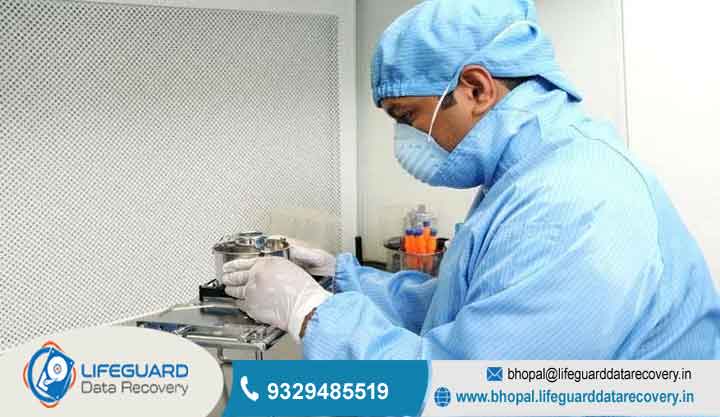
Professional laboratories utilize certified ISO Class 5 (Class 100) cleanrooms. These specialized enclosures circulate air through high-efficiency particulate air (HEPA) filters, maintaining particle-free conditions to ensure safe internal component handling.
Advanced Recovery for Complex Multi-Drive Configurations
Enterprise environments rely on advanced architectures to ensure uptime, which simultaneously makes recovery more complex when failures cascade. Leading technical teams possess deep expertise in rebuilding multi-drive systems:
RAID Arrays: Reconstructing stripped (RAID 0), mirrored (RAID 1), parity-based (RAID 5/6), or nested (RAID 10) configurations without functioning controllers.
NAS and SAN Environments: Managing proprietary file systems and logical volume managers (LVM) across network-attached storage units.
Virtualization Platforms: Extracting lost virtual machines and raw data stores from corrupted VMware VMFS or Microsoft Hyper-V VHDX containers.
Comprehensive Overview of Data Recovery Services Available
Every storage media type demands a distinct recovery workflow tailored to its underlying architecture and engineering specifications.
Solid-State Drive (SSD) and NVMe Chip-Off Recovery
Unlike mechanical hard drives, SSDs and NVMe drives utilize flash memory chips controlled by complex flash translation layers (FTL). When an SSD controller fails, standard software cannot communicate with the drive.
The Solution: Specialists utilize advanced chip-off techniques or direct terminal access protocols to bypass damaged controllers, reading raw NAND flash dumps and applying proprietary algorithms to reconstruct wear-leveling maps and encryption structures.
Hard Disk Drive (HDD) Mechanical and Firmware Repair
Mechanical hard drives experiencing severe component failure require delicate surgical intervention within an ISO-certified cleanroom.
Head Stack Assembly (HSA) Replacement: Swapping damaged read/write heads with precise donor parts matching the exact firmware revision, build code, and factory calibration parameters.
PCB and Firmware Module Reconstruction: Repairing or reprogramming damaged ROM chips and adaptive firmware modules to restore drive communication with host systems.
Mobile, Flash, and Legacy Media Retrieval
Consumer electronics and legacy media require specialized micro-soldering and monolithic data extraction techniques. Whether dealing with water-damaged smartphones, broken USB flash drives, or fragmented SD memory cards, professional labs isolate individual memory components to salvage precious personal or professional files.
Step-by-Step Diagnostic and Recovery Process
A transparent, methodical workflow protects both the integrity of the media and the confidentiality of the information being restored.
Intake Evaluation and Initial Damage Assessment
The device undergoes thorough non-destructive diagnostic testing. Engineers assess the health of the PCB, read/write heads, motor spindle, and logical structures to determine exact failure points and calculate realistic recovery probabilities.
Secure Sector-by-Sector Cloning
To prevent further wear on degrading media, technicians never perform recovery operations directly on the original customer drive. Instead, they engineer a customized hardware solution to create a bit-stream clone (an exact sector-by-sector copy) onto a healthy, secure target medium.
Data Reconstruction, Quality Assurance, and Secure Delivery
Once a complete clone is secured, software utilities reconstruct directory trees, recover partition tables, and verify file integrity headers. Recovered files undergo rigorous quality checks before being securely transferred onto encrypted delivery media.
Evaluating Credentials: How to Identify a Trusted Partner
Entrusting sensitive corporate data or irreplaceable personal archives to a service provider requires careful verification of their operational standards and ethical guidelines.
Red Flags to Avoid in Data Recovery Providers
Hidden Diagnostic Fees: Unscrupulous entities often quote low starting rates only to tack on exorbitant mandatory evaluation fees later.
Unverified Brokers: Companies that lack an on-site laboratory and simply ship sensitive client drives overseas introduce unnecessary transit risks and extended turnaround delays.
Reckless DIY Advice: Providers that encourage running aggressive data recovery software on physically clicking or failing drives without warning clients of the permanent risks involved.
Data Privacy, Non-Disclosure Protocols, and Chain of Custody
A Trusted Data Recovery Company Abu Dhabi enforces stringent security frameworks. Look for providers that offer formal non-disclosure agreements (NDAs), maintain secure isolated networks, and adhere to strict data destruction protocols once client verification is successfully completed.
Proactive Strategies to Prevent Future Data Loss
While professional recovery services can salvage data from catastrophic failures, prevention remains the most effective defense against operational downtime.
Implementing the 3-2-1 Backup Rule for Personal and Enterprise Assets
Organizations and individuals should adopt robust backup strategies:
Maintain at least three total copies of your data (one primary production copy and two backups).
Store copies across two different types of storage media (e.g., local hard drives and cloud storage).
Keep at least one backup copy completely offsite or offline to guard against ransomware and local disasters.
Monitoring Storage Health via S.M.A.R.T. Diagnostics
Utilize Self-Monitoring, Analysis, and Reporting Technology (S.M.A.R.T.) monitoring utilities to track critical drive health indicators such as reallocated sectors, spin-up times, and raw read error rates providing early warning signs before a drive fails completely.
Frequently Asked Questions (FAQs)
What should I do immediately if my hard drive starts making clicking noises?
Power off the device immediately and disconnect the power cable. Clicking sounds typically indicate severe read/write head collisions with the magnetic platters; keeping the drive powered on will rapidly scratch the platters and destroy recoverable data.
How long does a complex RAID or server data recovery procedure typically take?
Turnaround times vary depending on media capacity, array complexity, and damage severity. Standard diagnostics usually take 24 to 48 hours, while full mechanical or multi-drive RAID reconstruction can range from 3 to 7 business days.
Can encrypted files or ransomware-locked drives be successfully recovered?
Recovery viability depends entirely on the specific encryption algorithm used and whether decryption keys or backup restore points are accessible. Professional labs can often recover underlying unencrypted shadow copies or assist in evaluating decryption avenues.
Is it safe to use free downloadable data recovery software on a failing drive?
Running data recovery software on physically degraded hardware forces the drive’s mechanical components to work harder, which frequently triggers complete component failure or irreversible platter scratching. Software should only be used for logical deletions on healthy hardware.